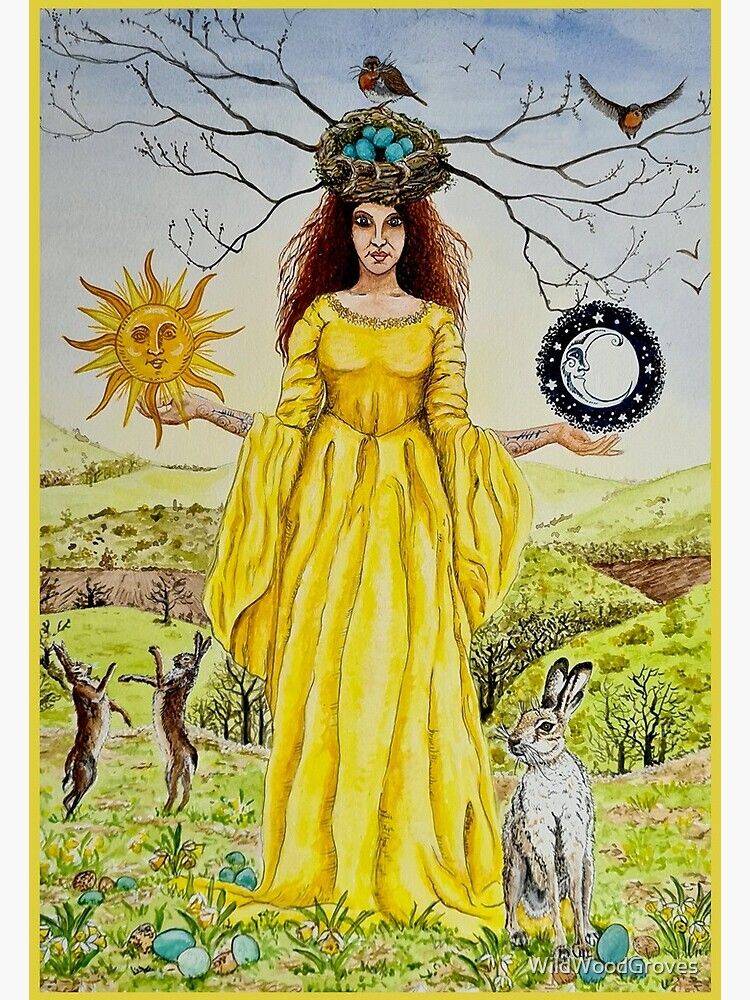
Ostara is the next sabbath..
What is ostara?
🌸✨ The energy of Ostara is all about balance, renewal, and ...
Ostara is a modern Pagan and Wiccan festival celebrating the Spring Equinox (around March 20-21 in the Northern Hemisphere), marking the arrival of spring, balance between light and dark, and themes of renewal, fertility, and rebirth. It is named after the Germanic dawn goddess, Eostre, and serves as a, if not the, predecessor to Easter traditions.
Key Aspects of Ostara:
Significance: It represents the moment day and night are in equal balance before light overtakes darkness. It is a time for planting seeds, both literal and metaphorical, for the coming year.
Origins: Named for the Germanic goddess Eostre/Ostara, associated with spring, fertility, and the dawn.
Symbols: Common symbols include eggs (representing potential/fertility), hares/rabbits (fertility/abundance), spring flowers (daffodils, tulips), and the colors green, yellow, and pastels.
Activities: Rituals often involve bringing nature inside, decorating eggs,, and meditating on themes of balance and growth.
While some traditions of the festival are ancient, the specific, formalized celebration of "Ostara" as a Wiccan holiday is a modern revival.
Ēostre - Wikipedia
Ēostre ([ˈeːostre])[1][2][3] is an Anglo-Saxon goddess mentioned by Bede in his 8th century work The Reckoning of Time. He wrote that pagan Anglo-Saxons had held feasts in her honour during the month named after her: Ēosturmōnaþ (April), and that this became the English name for the Paschal season: Easter.
Ostara (1884) by Johannes Gehrts. The goddess flies through the heavens surrounded by Roman-inspired putti, beams of light, and animals. Germanic people look up at the goddess from the realm below.

The Old High German name for April was the cognate Ôstarmânoth, which has led scholars to suggest there was a similar Continental Germanic goddess, *Ôstara. Their theory is supported by votive inscriptions dedicated to goddesses called the matronae Austriahenae, found in 1958 in Rhein-Erft-Kreis, Germany. The theonym may also be a part of some placenames and personal names.
By way of linguistic reconstruction, the matter of a goddess called *Austrō(n) in the Proto-Germanic language has been examined in detail since the foundation of Germanic philology in the 19th century by scholar Jacob Grimm and others. As the Germanic languages descend from Proto-Indo-European (PIE), historical linguists have traced the name to a Proto-Indo-European goddess of the dawn *H₂ewsṓs, from which may descend the Germanic goddess at the origin of the Old English Ēostre and the Old High German *Ôstara.
It has been debated whether the goddess was an invention of Bede, particularly before the discovery of the matronae Austriahenae and further developments in Indo-European studies. Due to these later developments, modern scholars generally accept that she was a genuine pagan goddess. Ēostre and Ostara are sometimes referenced in modern popular culture and are venerated in some forms of Germanic neopaganism.
Wikipedia
The Spiritual Meaning of Ostara
Explore the spiritual meaning of Ostara, the pagan celebration of spring. The spring equinox, also called the vernal equinox, happens around March 20 each year ...
Spiritual Meaning
The spiritual significance of Ēostre lies in her role as a herald of new beginnings and the balancing of forces:
The Return of Light: As a goddess of the dawn (linked to the word "East"), she represents the moment when light triumphs over dark, bringing joy and warmth back to the world.
Fertility and Rebirth: Ēostre is strongly connected to the fertility of the land, animals, and humanity. Her symbols—the hare and the egg—represent rapid reproduction, abundance, and the emergence of new life.
Balance: The festival marks the spring equinox, a time of perfect equilibrium between day and night, urging practitioners to seek inner balance.
The Maiden Archetype: She is often viewed as the "Maiden" aspect of the Triple Goddess, embodying youth, innocence, and potential.
A Time for Action: Ēostre represents the shift from the quiet, reflective, "dark" half of the year to the active "bright" half, serving as a time to turn hopes and intentions into action.
Health and Wellbeing
In modern Pagan and Heathen traditions, honoring Ēostre is connected to physical and emotional renewal:
Renewal of Energy: The season is seen as a time to shake off winter stagnation, bringing fresh energy, joy, and vitality to the human spirit.
Mental Clarity: By celebrating the returning light, practitioners often seek to gain "fresh eyes" on problems and release negative thoughts, promoting mental wellness.
Physical Cleansing: Historically and currently, this time is associated with cleansing, such as gathering morning dew or using spring water for washing to promote youth and health.
Nourishment: The season emphasizes connecting with the earth through gardening and consuming fresh, seasonal greens (like spinach or nettle) and eggs to improve physical health and vitality.
Symbolic Healing: The myth of Ēostre turning a wounded bird into a hare is used to meditate on themes of transformation, healing, and adaptability.
Add comment
Comments