Deadly nightshade
£4.00
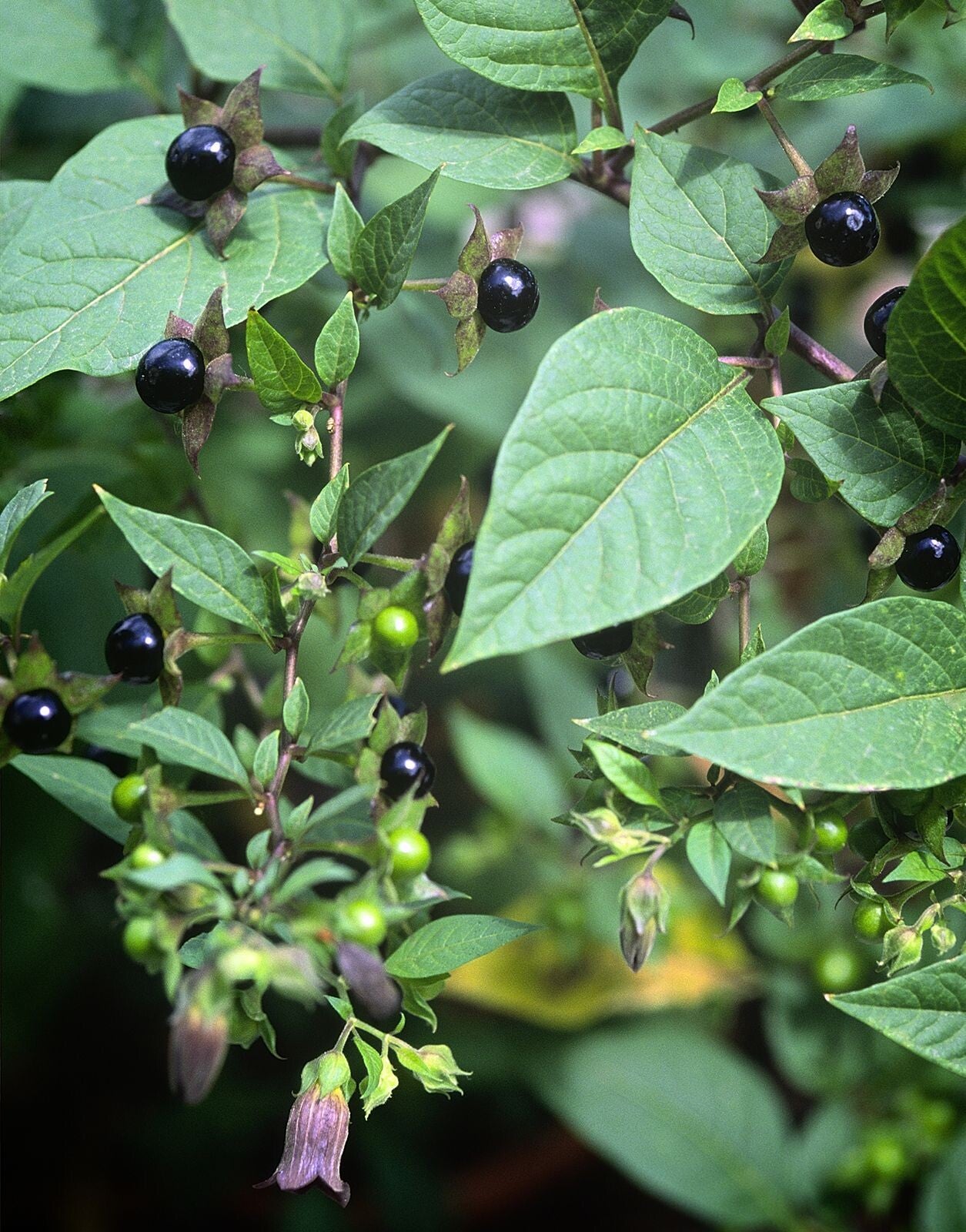
Deadly nightshade (Atropa belladonna) is a highly toxic herbaceous plant native to Europe, North Africa, and Western Asia. All parts of the plant, especially its shiny black berries, are extremely poisonous due to potent alkaloids like atropine, which affect the nervous system and can be fatal.
Key Characteristics & Identification
- Appearance: A bushy perennial that grows up to 2 meters tall with oval, pointed, dark green leaves.
- Flowers: Bell-shaped, about 2.5–3cm in length, and generally a dull purple or brownish-green color.
- Berries: Start green and turn into shiny, inky-black berries that resemble small cherries.
- Habitat: Prefers chalky, calcareous soils and is commonly found in scrubland, open woodlands, hedgerows, and along disturbed path edges.
Toxicity & Symptoms
Deadly nightshade is dangerous to humans, dogs, cats, and horses. Ingesting just a small number of leaves or a few berries can be fatal. Symptoms of poisoning include:
- Extreme pupil dilation and blurred vision
- Severe dry mouth and difficulty swallowing
- Hallucinations, delirium, and convulsions
- Rapid heart rate, respiratory failure, and death
Medicinal Uses
Despite its deadly reputation, the plant has a long history in pharmacology. Compounds extracted from the herb, such as atropine and scopolamine, are carefully utilized in modern medicine for several purposes:
- Ophthalmology: Atropine eye drops are used by optometrists to dilate pupils during eye exams.
- Heart conditions: Used to treat certain heart rhythm issues and slow heart rates.
- Antidotes: Serves as an antidote for specific types of poisoning (such as nerve gas and organophosphates).
- Gastrointestinal relief: Helps treat stomach cramps, irritable bowel syndrome (IBS), and motion sickness.