Mandrake
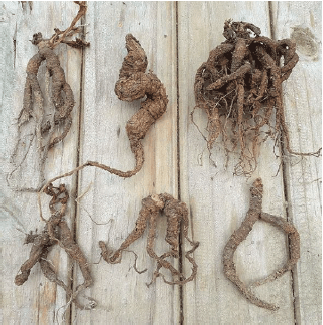
£2.00
Mandrake (Mandragora officinarum) is a highly toxic, perennial Mediterranean herb famed for its humanoid root and rich folklore. Historically used as a potent anesthetic and aphrodisiac, all parts of the plant are extremely poisonous and should only be handled or used under strict medical supervision.
Key Characteristics & Biology
- Family: Solanaceae (Nightshade family, alongside tomatoes and potatoes).
- Appearance: It features large, wrinkled leaves arranged in a rosette with white, purple, or greenish-blue bell-shaped flowers.
- The Root: Its forked, often anthropomorphic taproot is central to its mythology.
- Fruit: Produces large, foul-smelling yellow or orange berries.
History and Folklore
- Medical Anesthetic: Ancient physicians, including Dioscorides, used mandrake root and "mandrake wine" as a surgical anesthetic and narcotic.
- Mythology: Medieval legend claimed the plant shrieked when pulled from the earth, killing anyone who heard it, which led to elaborate (and fictional) harvesting rituals involving tethered dogs.
- Harry Potter: The herb achieved modern pop-culture fame via the Harry Potter series, where its seedlings caused temporary unconsciousness rather than death.
Warnings and Cultivation
- Toxicity: Mandrake contains highly biologically active tropane alkaloids (like atropine and scopolamine). Ingestion can lead to severe poisoning, hallucinations, and asphyxiation.
- Cultivation: While rare, it can be grown in deep, free-draining soil and full sun. It goes dormant during the summer months.